

TABLE OF CONTENT
- 1. What Is a Bitcoin Mining Machine?
- 2. Types of Bitcoin Mining Machines
- 3. Key Performance Metrics of a Bitcoin Mining Machine
- 4. Leading Bitcoin Mining Machine Brands
- 5. Popular Bitcoin Mining Machines for Professional Mining
- 6. How to Choose the Right Bitcoin Mining Machine
- 7. Bitcoin Mining Machine Pricing and Buying Considerations
- 8. Is a Bitcoin Mining Machine Still Profitable in 2025?
- 9. Where to Buy a Bitcoin Mining Machine
Summary
This guide explains what a bitcoin mining machine is, how ASIC miners work, and how to choose the right hardware for profitable Bitcoin mining. It covers mining machine types, performance metrics, cooling methods, leading brands, and key buying considerations for both home miners and large-scale mining operations.
1. What Is a Bitcoin Mining Machine?
1.1 Definition of a Bitcoin Mining Machine
A bitcoin mining machine is specialized hardware designed to validate transactions and secure the Bitcoin network through the SHA-256 mining algorithm. Unlike general-purpose computers, modern bitcoin mining machines are built exclusively for mining and are optimized for maximum computational efficiency.
Today, almost all professional bitcoin mining operations rely on ASIC miners (Application-Specific Integrated Circuits), which deliver significantly higher hashrate and lower power consumption compared to CPUs or GPUs.
1.2 Why ASIC Miners Dominate Bitcoin Mining
Early Bitcoin miners relied on CPUs and later GPUs to secure the network. While these general-purpose processors played an important role in the early stages of mining, they are no longer competitive in today’s Bitcoin ecosystem. Modern ASIC miners are purpose-built for the SHA-256 algorithm and significantly outperform CPUs and GPUs by delivering substantially higher hashrate while consuming far less power. This combination of superior computational output and optimized energy efficiency makes ASIC mining hardware the only practical and sustainable solution for professional Bitcoin mining operations.
2. Types of Bitcoin Mining Machines
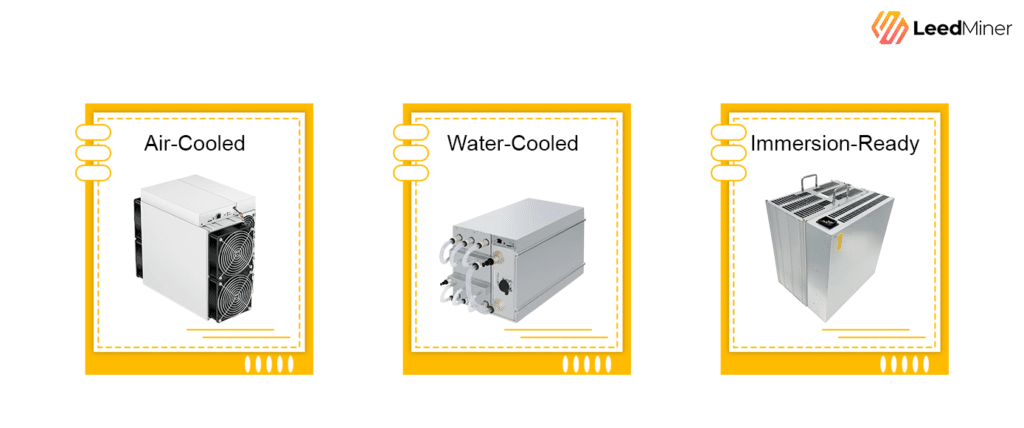
2.1 Air-Cooled Bitcoin Mining Machines

Air-cooled bitcoin mining machines use high-speed fans to dissipate heat. They are widely used due to their simple installation and lower upfront cost, making them suitable for small mining farms and controlled industrial environments.
2.2 Water-Cooled (Hydro) Bitcoin Mining Machines
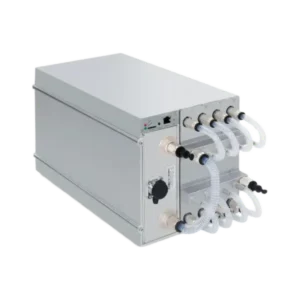
This table shows how each model scales in terms of power, efficiency, and noise—allowing you to quickly identify which fits your mining environment.
2.3 Immersion-Ready Bitcoin Mining Machines
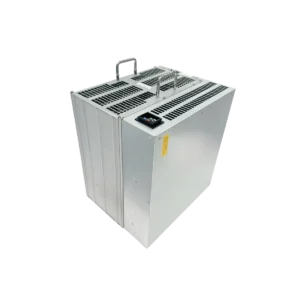
Immersion-ready mining machines are designed to operate in dielectric fluid, allowing for maximum heat transfer and long-term reliability. This solution is commonly adopted by professional mining farms seeking optimal energy efficiency.
2.4 Home Bitcoin Mining Machines
Home bitcoin mining machines are designed for individual miners who operate in residential or small-scale environments. These machines focus on lower power consumption, reduced noise levels, and simplified setup compared to industrial mining hardware. While home mining machines typically deliver lower hashrate than large-scale farm units, they allow miners to participate in Bitcoin mining without requiring specialized infrastructure or advanced cooling systems.
There are many options for home mining rigs. I previously wrote an introduction to the Solo rig, including how to set it up; you can check it out if you’re interested.
3. Key Performance Metrics of a Bitcoin Mining Machine
3.1 Hashrate and Mining Difficulty
Hashrate measures the computational power of a bitcoin mining machine. Higher hashrate increases the probability of mining blocks, but profitability is also influenced by Bitcoin network difficulty, which adjusts dynamically.
3.2 Power Consumption and Energy Efficiency (J/TH)
Energy efficiency, expressed in joules per terahash (J/TH), is one of the most critical factors when selecting a mining machine. Lower J/TH values indicate better efficiency and lower operational costs over time.
3.3 Cooling Requirements and Noise Levels
Cooling requirements and noise output directly impact deployment options. While air-cooled miners require noise isolation, hydro and immersion miners significantly reduce acoustic impact and improve system longevity.
4. Leading Bitcoin Mining Machine Brands
4.1 Bitmain Antminer Bitcoin Mining Machines

Bitmain is one of the most established manufacturers in the Bitcoin mining industry. Its Antminer series is widely recognized for reliability, performance consistency, and extensive model selection for both air-cooled and hydro mining.
4.2 MicroBT Whatsminer Bitcoin Mining Machines

MicroBT’s Whatsminer lineup is known for robust industrial design and stable long-term performance, making it a preferred choice for large mining farms.
4.3 Canaan Avalon Bitcoin Mining Machines

Canaan Avalon miners offer balanced performance and are often used by miners seeking operational stability and ease of deployment.
5. Popular Bitcoin Mining Machines for Professional Mining
5.1 Antminer S21 Series Bitcoin Mining Machines
The Antminer S21 series represents the latest generation of Bitcoin mining machines, delivering higher hashrate and improved efficiency to meet modern mining demands.
5.2 Antminer S19 XP Hydro Bitcoin Mining Machine
The Antminer S19 XP Hydro is a water-cooled mining machine designed for high-density mining environments, offering excellent efficiency and stable long-term operation.
5.3 Whatsminer Bitcoin Mining Machines
MicroBT Whtasminer models are engineered for industrial-scale mining operations, combining strong hashrate output with optimized power efficiency.
6. How to Choose the Right Bitcoin Mining Machine
6.1 Electricity Cost and Mining Profitability
Electricity cost is the most significant ongoing expense in Bitcoin mining. Selecting an energy-efficient mining machine is essential for maintaining profitability, especially in regions with higher power rates.
6.2 Home Mining vs Mining Farm Deployment
Home mining typically favors compact, lower-noise machines, while mining farms prioritize efficiency, cooling integration, and scalability.
6.3 Air Cooling vs Hydro vs Immersion Cooling
Each cooling method offers distinct advantages. The optimal choice depends on scale, infrastructure, and long-term operational strategy.
7. Bitcoin Mining Machine Pricing and Buying Considerations
7.1 What Affects the Price of a Bitcoin Mining Machine
Bitcoin mining machine prices vary based on hashrate, energy efficiency, cooling design, market demand, and production cycles.
7.2 Bulk Purchase, Hosting, and Delivery Options
Bulk purchasing and professional hosting services can significantly reduce deployment complexity and improve cost efficiency for large-scale mining operations.
8. Is a Bitcoin Mining Machine Still Profitable in 2025?
8.1 Bitcoin Network Difficulty and Halving Impact
Bitcoin mining profitability is influenced by network difficulty adjustments and halving events, which reduce block rewards over time.
8.2 Choosing the Right Machine for Long-Term Mining
Selecting future-proof mining machines with strong efficiency and cooling support is critical for sustaining profitability across market cycles.
9. Where to Buy a Bitcoin Mining Machine
9.1 Buying Directly from Manufacturers
Purchasing directly from manufacturers ensures authenticity but often involves longer lead times and limited customization.
9.2 Purchasing from Professional ASIC Miner Suppliers
Professional ASIC miner suppliers offer flexible purchasing options, faster delivery, and access to a broader range of mining solutions.