

Summary
In the cryptocurrency industry, security remains paramount. With frequent hacking attacks, phishing scams, and private key leaks, more and more investors are realizing that the best way to securely store crypto is to use a cold wallet for offline storage.
If you want to protect your Bitcoin, Ethereum, or other crypto assets, using a cold wallet is one of the most effective, secure, and long-term methods. This article will provide a complete overview:
What is a cold wallet?
How it works
Types of cold wallets
Advantages and disadvantages
How to choose the most suitable cold wallet for yourself
What Is a Cold Wallet?
A cold wallet is a crypto wallet that stores your private keys offline. Since the device never connects to the internet, your keys are protected from online attacks, malware, and unauthorized access.
Cold wallets are different from hot wallets, which stay connected to the internet through apps, browsers, or exchanges. Hot wallets are easier to use but carry more security risks.
In short:
Cold wallet = Security > Convenience
Hot wallet = Convenience > Security
How Do Cold Wallets Work?
The key reason why cold wallets are particularly secure lies in how they operate:
Keys Are Created Offline
The device creates a random private key inside the wallet. The key never touches the internet or your computer.
Offline Transaction Signing
When a user wants to send cryptocurrency:
Create a transaction on a network-connected device (without the private key)
Send the transaction to a cold wallet
The cold wallet signs the transaction internally using the private key (completed offline)
Send the signed transaction back to the network-connected device
The network-connected device broadcasts the transaction to the blockchain
Throughout the entire process, the private key never leaves the cold wallet device.
Multiple Security Layers
Cold wallets often include:
PIN codes
Seed phrases
Passphrases
Multi-signature support
Secure chips
This makes unauthorized access very difficult.
Types of Cold Wallet
There are several kinds of cold wallets, each offering different levels of safety and ease of use. Different types of cold wallets can meet the needs of different users. The following five are the most common offline storage methods:
1. Hardware Wallet
Hardware wallets are small physical devices designed for crypto security. They store private keys inside a secure chip and support offline signing.
Well-known brands include:
Ledger
Trezor
Bitkey
Keystone
SafePal
Key features:
Very high security
Easy for beginners
Supports many cryptocurrencies
QR code or USB signing options
Multi-signature protection
Best for long-term holding, large amounts of crypto, and beginner-friendly security.
2.Offline Software Wallets
These wallets store keys on a computer that is kept offline. They work like hot wallets but require more technical knowledge.
Examples: Electrum (offline mode), Armory.
Good for advanced users but not ideal for frequent transactions.
3. Paper Wallet
Advantages: Simple and inexpensive
Disadvantages:
Easily damaged
Easily lost
Once the paper is destroyed → permanent loss of asset
Not recommended for large sums of money
4. Deep Cold Storage
Store your private key in a location that is extremely difficult to access, such as:
Fireproof safe
Bank safe deposit box
Offline vaults of professional custodians
Underground storage rooms
Suitable for institutions holding extremely large amounts of assets.
5. Sound Wallet
A rare and expensive method. Private keys are encoded into audio files on CDs or vinyl. A spectroscope can decode the information.
Advantages of cold wallets
Completely offline, virtually impossible to remotely hack
The most secure way to store encrypted assets
Suitable for long-term holding
Complete control over private keys, no need to trust third parties
Can be combined with multi-signature for even higher security
How to Choose the Best Cold Wallet
Choosing the right cold wallet depends on your goals, budget, and technical comfort.
Security
Look for:
Secure Element chips
Anti-tamper protection
Open-source firmware
Multi-signature support
Coin Support
Make sure the wallet supports the cryptocurrencies you own.
Ease of Use
Check whether the device offers:
Touchscreen
QR code signing
Mobile app support
Clear setup instructions
Budget
Entry level: $40–$80
Mainstream: $90–$150
High security: $200+
How to Set Up a Cold Wallet (Step-by-Step)
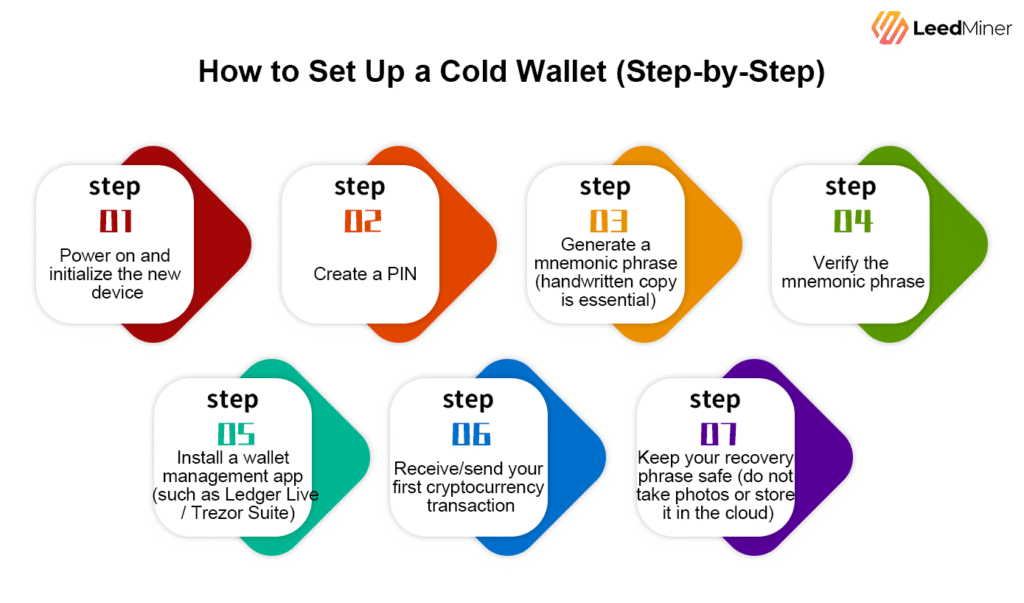
Cold Wallet Best Practices
Always buy from official websites or authorized dealers
Never buy second-hand hardware wallets
Mnemonic phrases must be saved offline
Never enter your mnemonic phrase into any website
It’s best to have multiple backups
Store it like cash or gold
Conclusion
Cold wallets are currently the most secure and reliable way to store crypto assets. Whether you’re a beginner or a long-term holder, if you have a large amount of assets or need the highest level of security, a cold wallet is the best choice.
Want to store Bitcoin, Ethereum, or other assets long-term?
A cold wallet is the only essential tool you need.